


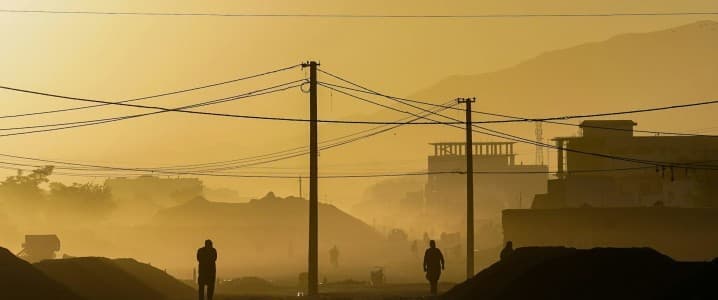
Escalation of Conflict Between Pakistan and Afghanistan
The recent outbreak of violence between Pakistan and the Taliban-led Afghanistan has caught the attention of global markets, raising concerns about regional stability and its implications for Central Asia's trade routes. This conflict marks a significant escalation in hostilities, disrupting not only local economies but also international trade dynamics that rely on these critical pathways. As both nations grapple with the ramifications of the ongoing clashes, the potential for a broader economic impact looms large.
Impact on Central Asian Trade Infrastructure
Central Asia has long been viewed as a pivotal hub for trade, connecting Europe, the Middle East, and Asia. However, the renewed conflict has put a strain on existing trade routes that traverse through Pakistan and Afghanistan. The already fragile infrastructure in these regions is at risk of becoming further compromised, as security concerns deter foreign investments and disrupt supply chains. Analysts fear that prolonged instability could lead to a significant decline in trade volume, affecting not just the local economies but also global supply chains that depend on these routes.
Economic Consequences for Regional Players
The conflict's effects are being felt not only in Pakistan and Afghanistan but also in neighboring countries. Central Asian nations such as Uzbekistan and Kazakhstan, which rely on Pakistan as a transit route for their goods, are now facing increased transportation costs and delays. The uncertainty surrounding the safety of these routes has led to a reassessment of trade strategies, with some nations considering alternative paths that could be longer and more expensive. As these countries navigate the shifting landscape, their economic growth could be stunted, impacting their ability to engage in global markets effectively.
Global Markets React to Regional Instability
In the wake of the conflict, global markets have shown signs of volatility as investors weigh the potential ramifications on trade and economic stability. Commodities that rely on Central Asian routes, such as oil and gas, have experienced fluctuations in prices due to concerns over supply disruptions. Furthermore, multinational corporations with interests in the region are reevaluating their strategies, as the risk of doing business in an unstable environment becomes increasingly apparent. The interconnectedness of global markets means that the fallout from this conflict could reverberate far beyond the immediate region.
International Response and Diplomatic Efforts
As the situation escalates, the international community has begun to take notice, with various nations and organizations calling for dialogue and peaceful resolution. Diplomatic efforts are underway to de-escalate tensions and restore stability in the region. The involvement of global powers, particularly those with vested interests in Central Asian trade, could play a crucial role in mediating the conflict. However, the effectiveness of these diplomatic initiatives remains to be seen, as both sides have entrenched positions that complicate negotiations.
Long-term Implications for Central Asia
The long-term implications of the Pakistan-Afghanistan conflict on Central Asian trade routes are profound. Should the violence continue unabated, the region risks becoming increasingly isolated from global trade networks, leading to economic stagnation and a decline in foreign investment. The potential