


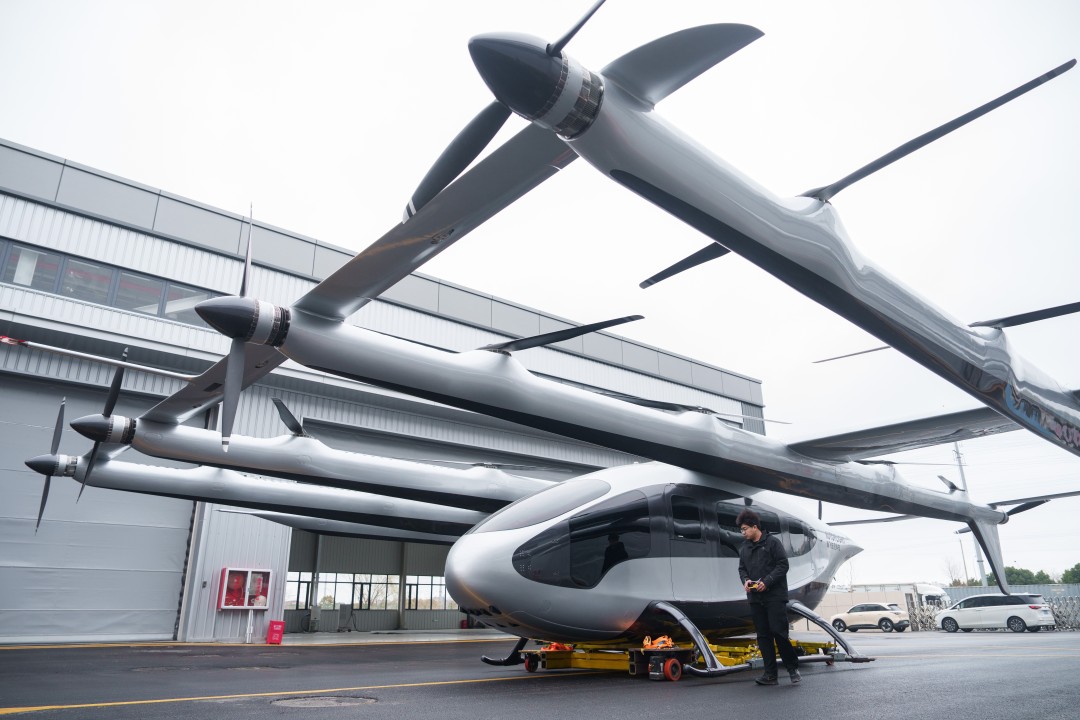
Overview of the Flying Taxi Prototype
In a significant advancement for urban mobility, a prototype flying taxi, dubbed "The Matrix," is being developed in Kunshan, a city located approximately 35 miles west of Shanghai. This ambitious project aims to revolutionize transportation by integrating aerial technology into daily commutes. The Matrix, characterized as a large drone, is designed to operate autonomously, carrying passengers over congested urban landscapes and potentially alleviating ground traffic woes.
The Technological Innovations Behind The Matrix
The Matrix is equipped with cutting-edge technologies that provide insights into the future of aerial transportation. With an emphasis on safety and efficiency, the prototype utilizes advanced sensors and artificial intelligence to navigate urban environments. The incorporation of vertical takeoff and landing (VTOL) capabilities allows it to operate in limited spaces, making it suitable for cityscapes where traditional infrastructure may not be feasible.
Additionally, The Matrix features a hybrid power system, combining electric and traditional fuel sources. This innovation not only enhances its range and performance but also aligns with global sustainability goals by reducing carbon emissions. As cities worldwide grapple with pollution and climate change, the introduction of eco-friendly flying taxis represents a potential solution to pressing urban challenges.
Market Implications and Investment Opportunities
The development of flying taxis is poised to create substantial market opportunities for various industries, including aerospace, telecommunications, and autonomous systems. As companies race to establish themselves in this emerging sector, significant investments are being directed toward research and development. Venture capitalists and private equity firms are increasingly interested in startups focused on urban air mobility, indicating a burgeoning market ripe for innovation.
In addition to direct investments in flying taxi prototypes, ancillary markets such as infrastructure development will likely benefit. Companies that specialize in building vertiports—designated landing and takeoff sites for flying taxis—are expected to see increased demand. Furthermore, advancements in air traffic management systems will be crucial as more aerial vehicles take to the skies, leading to new opportunities for tech firms specializing in software solutions.
Regulatory Challenges and Safety Considerations
While the potential for flying taxis is vast, significant regulatory challenges remain. Governments across the globe must establish frameworks that ensure safety and efficiency in the airspace. The Federal Aviation Administration (FAA) in the United States and its counterparts in other countries are currently evaluating how to integrate these vehicles into existing air traffic systems without compromising safety.
Moreover, public acceptance of flying taxis hinges on perceived safety. The Matrix prototype is undergoing rigorous testing to demonstrate its reliability and security features. Stakeholders emphasize the importance of building trust among potential passengers, as safety concerns could hinder widespread adoption. As successful demonstrations unfold, they may pave the way for regulatory approvals and ultimately, commercial operations.
Global Competition in Urban Air Mobility
China's advancements in flying taxi technology are part of a broader global trend where countries are racing to dominate the urban air mobility market. Major players, including companies in the United States and Europe, are also developing their prototypes and exploring partnerships with aviation authorities. This