


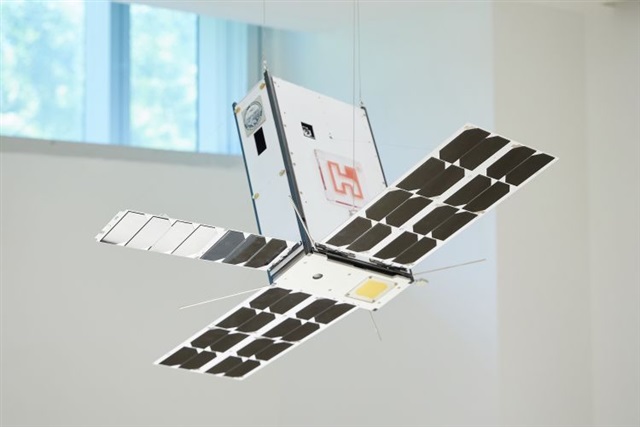
Expanding Horizons: The Ramon.Space and Ingrasys Collaboration
In a groundbreaking partnership, Ramon.Space and Ingrasys, a subsidiary of Foxconn, have announced an expanded collaboration to develop a new orbital data center platform. This initiative is poised to address the increasing energy demands and bandwidth pressures facing terrestrial artificial intelligence (AI) data centers. As cloud computing and AI continue to proliferate, the need for innovative solutions to manage data processing and storage has never been more critical.
The Rationale Behind Orbital Data Centers
Traditional data centers have long been the backbone of the digital economy, but they are facing mounting challenges. As the demand for data processing escalates due to advancements in AI, machine learning, and big data analytics, the limitations of terrestrial infrastructure are becoming apparent. Issues such as energy consumption, latency, and bandwidth capacity are driving the exploration of alternative solutions. Orbiting data centers present a unique opportunity to leverage the vastness of space to overcome these challenges.
Technological Innovations Driving the Initiative
The collaboration between Ramon.Space and Ingrasys aims to harness cutting-edge technology to create a robust orbital data center platform. By utilizing satellite technology and advanced computing capabilities, the partners envision a system that can efficiently process and store massive amounts of data in low-Earth orbit. This approach could drastically reduce latency for global data transmission while also improving energy efficiency compared to traditional ground-based facilities.
Addressing Energy and Bandwidth Constraints
One of the primary motivations for this partnership is the growing concern over energy consumption in data centers. According to recent estimates, data centers account for approximately 2% of the global electricity demand, a figure that is expected to rise as digital services expand. By relocating data processing to orbit, Ramon.Space and Ingrasys aim to mitigate these energy concerns, utilizing solar power and other renewable sources to operate their systems sustainably.
Moreover, the partnership seeks to address bandwidth constraints that can hinder data transfer speeds. By positioning data centers in space, data can be transmitted across shorter distances, potentially leading to faster communication and processing times. This could be particularly beneficial for industries with high bandwidth requirements, such as telecommunications and streaming services.
Market Implications and Future Prospects
The implications of this collaboration extend beyond technological advancements; they also carry significant market potential. As businesses increasingly rely on data-driven strategies, the demand for efficient data processing solutions is expected to surge. The development of orbital data centers could position Ramon.Space and Ingrasys at the forefront of a burgeoning market, attracting interest from tech giants and startups alike.
Investors are likely to view this partnership favorably, especially given the increasing emphasis on sustainable technology solutions. The ability to offer energy-efficient data processing in space could enhance the competitive edge of both companies, potentially leading to lucrative contracts with major corporations seeking to optimize their data operations.
Challenges and Considerations Ahead
While the prospects of this collaboration are promising, several challenges remain. The technical complexities of building and maintaining data centers