


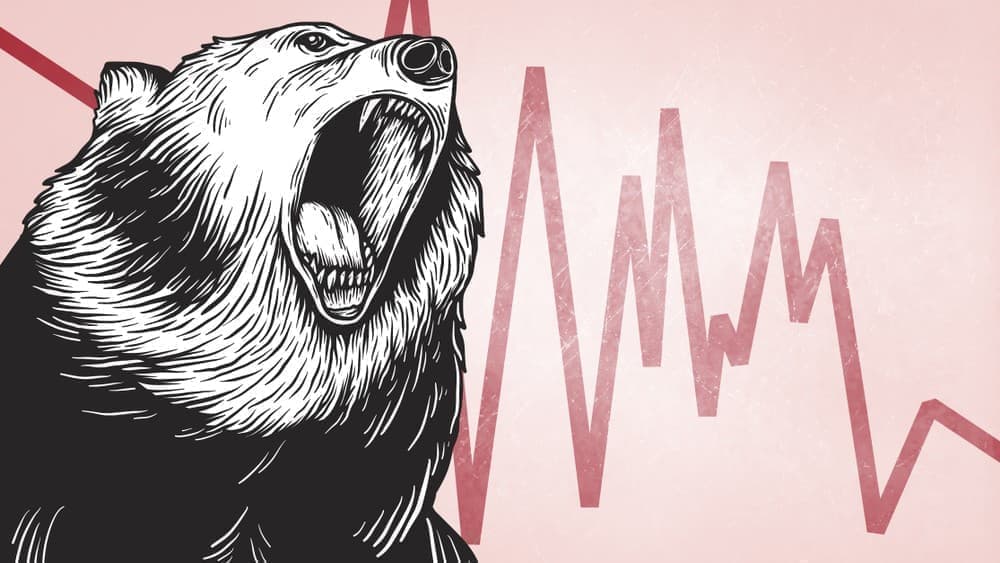
The Illusion of Stability in Financial Markets
In recent years, global financial markets have exhibited a remarkable resilience, often defying gravity in the face of economic uncertainty. Central banks have played a pivotal role in this phenomenon, employing unprecedented monetary policies characterized by low interest rates and expansive quantitative easing. However, as inflationary pressures mount and geopolitical tensions escalate, many analysts are beginning to question whether the foundations of this stability are as solid as they appear.
The metaphor of Wile E. Coyote, perpetually in pursuit of the elusive Road Runner, aptly encapsulates the current state of financial markets. Just as the coyote runs off a cliff, blissfully unaware of the impending fall, investors have been buoyed by the illusion of an ever-recovering economy. Yet, the signs of a potential reckoning are becoming increasingly apparent, suggesting that reality may soon catch up with market sentiment.
Inflationary Pressures and Central Bank Responses
Inflation, which had been largely dormant for a decade, has surged to levels not seen in generations. Supply chain disruptions, surging energy prices, and increased consumer demand have combined to create a perfect storm for rising prices. Central banks, once focused on stimulating growth, are now faced with the dual challenge of controlling inflation while not derailing economic recovery.
The U.S. Federal Reserve, along with other central banks worldwide, has begun to taper asset purchases and signal interest rate hikes. This shift in monetary policy is reminiscent of past tightening cycles, where markets reacted with volatility and uncertainty. Investors are now grappling with the reality that the era of cheap money may be coming to an end, a scenario that could lead to significant market corrections.
The Impact of Geopolitical Tensions
In addition to inflation, geopolitical tensions are adding another layer of complexity to the financial landscape. The ongoing conflict in Eastern Europe, coupled with rising tensions in Asia, has created an environment of uncertainty that is palpable in the markets. Investors are increasingly wary of the potential ramifications of these conflicts, which could disrupt trade and economic stability.
As countries grapple with their own economic challenges, the interconnectedness of global markets means that localized issues can quickly escalate into broader financial crises. This reality has prompted many investors to reassess their portfolios, seeking to mitigate risks associated with geopolitical instability. The flight to safety in government bonds and gold is indicative of a growing apprehension among market participants.
Corporate Earnings and Economic Fundamentals
While corporate earnings reports have largely exceeded expectations in recent quarters, the sustainability of this growth remains in question. Many companies have benefited from a post-pandemic recovery, but as costs rise and consumer behavior shifts, maintaining profitability may prove challenging. Analysts are closely monitoring earnings guidance for signs of weakness, particularly in sectors sensitive to consumer spending.
The disconnect between soaring stock prices and underlying economic fundamentals is becoming increasingly pronounced. In many cases, valuations are at historical highs, raising concerns about whether markets are pricing in future growth or simply riding the wave of investor optimism. This divergence may lead to a recalibration as investors come to terms with the realities of a changing economic landscape.
The Role of Retail Investors and Market Sentiment
The rise of retail investors, fueled by the accessibility of trading platforms and social media, has significantly influenced market dynamics. This demographic has shown an unprecedented willingness to engage in speculative trading, often driving stock prices to unsustainable levels. However, as market conditions shift, the sentiment of retail investors may also change, potentially leading to abrupt market corrections.
Market sentiment can be a double-edged sword; while it can propel stocks higher, it can also lead to rapid sell-offs when fear takes hold. The psychology of investing is a critical factor that often overlooks fundamental analysis, leading to scenarios where markets become detached from reality. As the coyote runs off the cliff, the collective mindset of retail investors could amplify the impact of a market downturn.
The Potential for Market Corrections
As the indicators of economic stress become more pronounced, the potential for market corrections looms large. Analysts suggest that a combination of rising interest rates, persistent inflation, and geopolitical uncertainties could trigger a significant pullback in equity markets. Investors may soon find themselves at a crossroads, forced to reevaluate their strategies in light of a rapidly changing environment.
Historically, market corrections have served as a necessary reset, allowing for a more sustainable recovery. However, the timing and magnitude of such corrections remain uncertain. Investors must remain vigilant, balancing their desire for growth with an awareness of the risks that lie ahead. The coyote may be running, but the ground is beginning to fall away.
Conclusion: Preparing for a New Financial Landscape
As reality begins to encroach upon the seemingly invincible financial markets, investors must prepare for a new landscape characterized by increased volatility and uncertainty. The lessons of the past, particularly those learned during previous financial crises, highlight the importance of maintaining a diversified portfolio and employing sound risk management strategies.
In this evolving environment, staying informed and adaptable will be paramount for investors navigating the complexities of the market. Just as Wile E. Coyote eventually realizes the precariousness of his situation, market participants will need to acknowledge the shifting dynamics and prepare for the potential fallout. The path ahead may be fraught with challenges, but those who remain vigilant and proactive may find opportunities amid the turbulence.